New RSGI Report: From defending spend to managing it


Hi there,
For the last few months, I've had the same conversation with GCs: legal teams govern outside counsel spend at the wrong stage — invoice review instead of matter inception, reporting instead of process. And it's costing them in money, credibility, and the relationship with the business.
Governing at inception, before scope is set, before the firm starts the clock, is what PERSUIT was built to produce: fast, visible, defensible ROI. A new, independent report from research firm RSGI now has the numbers to back that up.
- 76% of in-house legal teams ranked PERSUIT number one for speed to value — faster than any other legal technology in their stack.
- 64% could credibly demonstrate impact to leadership in under three months.
- 76% said if their CFO asked them to justify the ROI of one legal technology, they'd choose PERSUIT first.
These findings come from interviews with 25 in-house legal leaders spending between $10mn and $250mn+ annually on outside counsel across the US and Europe.
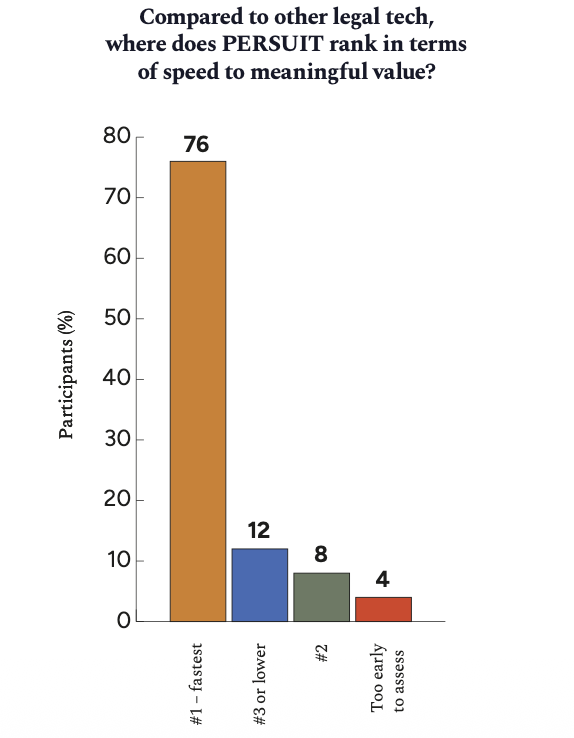
The reason PERSUIT delivers these results is structural. Most legal technology operates after the fact: e-billing reviews invoices already generated, CLM manages contracts already signed. PERSUIT operates before work begins, when scope, price, and counsel are still being decided.
Operating at inception changes what the Finance conversation looks like. A legal ops leader at an energy company put it best:
"By showing the discipline of competitive pricing, we immediately show that we are good stewards of the resource capital. The conversation shifts to, 'That sounds really cool – can you tell us how it works?', not 'Are you doing the right thing?'"
That shift from scrutiny to curiosity shows up in the data: 68% of teams reported measurably increased credibility with Finance after implementing PERSUIT — 36% called it significant. Not one team reported a decline.
The financial picture is equally clear: 45% reported cost avoidance of $5mn or more in the past year. Where participants gave a percentage, the number came in consistently: 20-34% per engagement. One litigation matter: top bid $12mn, lowest bid $4.5mn. That gap was always there. PERSUIT's competitive process made it visible before work started.
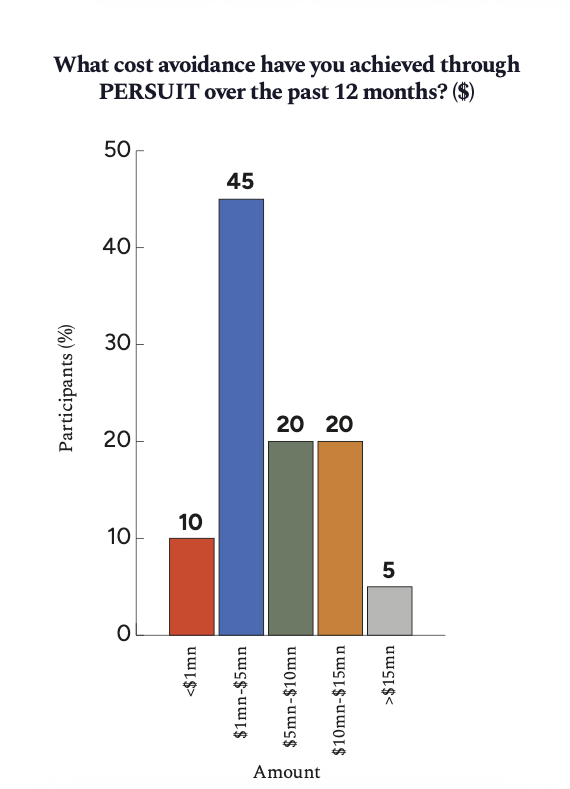
That data doesn't happen by accident. The teams driving these results made specific choices about how they governed:
- Agreed on ROI methodology with Finance before reporting began — not after numbers landed and got disputed
- Made competitive sourcing policy, not a suggestion
- Built commitments on record before work started, because you can't retroactively reconstruct a process that never existed
The data is in. The only question left is whether you're governing at the stage that produces these results — or the stage that explains why you didn't.
Cheers,
-Jim